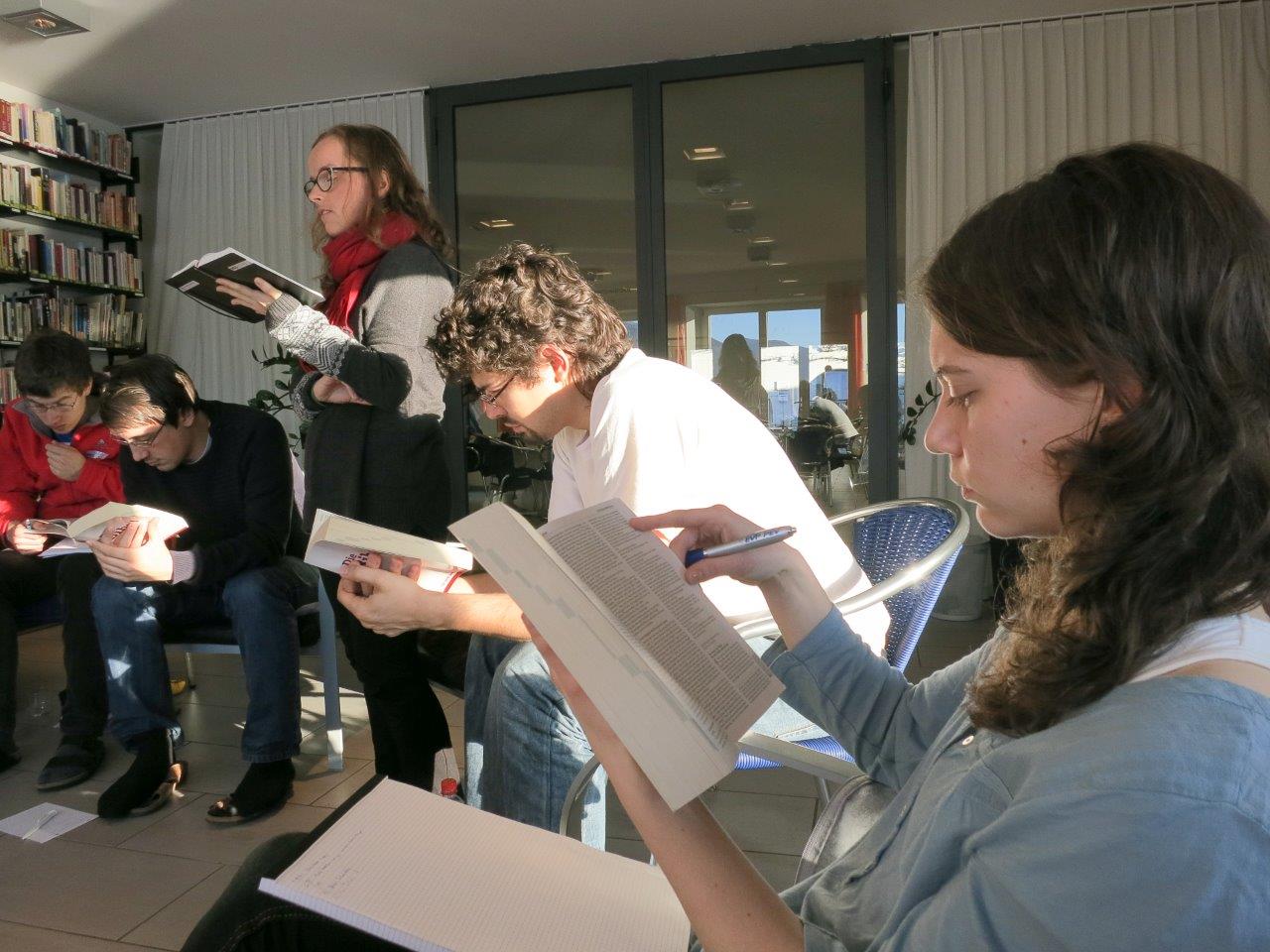

This was the theme of a very memorable Scripture engagement consultation for which over 100 NIFES student leaders, staff and associates gathered in Abuja, the capital of Nigeria. Our time together started with a pre-consultation to train the small group facilitators on how to lead their groups. This was important since work in small groups played a significant role during the consultation.
 One of the high points of this consultation was a small group project, in which we worked together on the way in which God’s Word connects to the realities of our context. One aim of this exercise was to renew the good practice of coming back to the Scriptures when dealing with the challenges of our context thereby strengthening our conviction that Scripture is relevant to all of life.
The contextual issues which were identified for consideration during the small group project were:
- examination malpractice/academic corruption
- corruption and governance
- sexuality
- poverty and violence
- cultural practices
- persecution
Each small group worked on one contextual issue in four steps. First, we identified the main challenges about this issue: what provokes us to seek a Christian response? Secondly, we brainstormed biblical passages which could help address this issue. Thirdly, we chose one biblical passage to look at in more detail and see how it speaks to the contextual issue. Lastly, we thought about creative approaches/relevant ways of sharing this passage and its perspective in our context.
Each group presented their work on a cardboard paper and displayed it for the other participants to go through. This was really educating!
Personally, working on the small group project was very transforming. Going through the Scriptures to see what God’s Word says about every form of malpractice and corruption was not only hard work but also engaging. The big question became: How will we as a national movement address the issue of examination malpractice/academic corruption in our country?
When I now hear of Scripture engagement, I do not only think of studying my Bible, but of much more. I think of LSLS: I think of Loving, Studying, Living and Sharing God’s Word. For me, Scripture engagement has shifted from being a mere activity to a lifestyle. I have resolved to live out the Word of God and to share it with my friends and siblings. My conviction about Scripture has deepened and I desire the fruitful change which God’s Word brings.
Jesus the host, who invites us to his Word, is the reality that changes everything.
ndubuakudavid(at)gmail.com

 study, which lasts about 45 minutes. We successively study complete books of the Bible. At the beginning of each semester, I send our calendar to the staff with the meeting dates and the people responsible for directing each weekly study. In this way, we have advanced a lot in our Bible studies over the past ten years: we have studied the Minor Prophets (they took us about a year and a half!), John and the epistles of John, Genesis, Revelation, Acts and we are currently studying Luke. The second part of our meeting contributes to the intimacy of our staff team. It is a time of mutual prayer and intercession. Each one of us shares their blessings and current struggles and is prayed for by the others. We also take time to pray for specific situations the movement is facing. Lastly, each one of us answers the question: What are you doing this week? This helps us organise our work and know what the other staff will be doing, even if they are 1,000 km away!
 The Italian context in which I live is characterized by suspicion and skepticism. It surprises me that in this context more seekers than I would have expected are curious to study Bible passages in a safe place with other fellow seekers. And when they come, oh, it is fascinating to see their reactions: “My first impression was shocking: I discovered in the Bible a marvelous figure, so human when angry and indignant in the face of unbelief and hypocrisy, and so divine in speaking with an authority never seen before… and even able to forgive his persecutors!’” says Gianluca, a medicine student.
 Over the years, this practice has caught on across the region. At the student leaders’ retreat in Singapore (2014), God used this time of selah to break into their hearts. It was a time of being convicted together and listening to what God really wanted to do through their fellowship.